Begin your Uzbekistan journey in the country’s modern capital, where museums, markets, parks, dining, and international connections create a smooth starting point.
Tashkent: Half-Day and Full-Day City Visits
Overview
Choose the pace of your Tashkent visit
These are suggested sightseeing plans, with approximately 3–4 hours for a half-day or 6–8 hours for a full day including breaks. Timing depends on your arrival, pace, opening hours and transfers.
Half-day idea: old city and market
Focus on the Hazrati Imam area and Chorsu Bazaar, using short transfers where useful. Keep interiors optional and allow time for market lanes, uneven surfaces and rest stops. This lighter plan can suit an arrival day if your flight time and energy allow.
Full-day idea: add the metro and city center
Build on the old-city visit with selected metro stations and a city-center walk, with a lunch break. A museum can replace part of the walk if you prefer; confirm the chosen museum and its opening day before fixing the schedule.
What to agree before the visit
Specify your hotel or other meeting point, pickup time, guide language, transport, walking comfort and any step-free access needs. Confirm which interiors, admissions and meals are included in writing. Airport pickup and onward station transfers are separate arrangements unless your quotation includes them.
Request a half-day or full-day Tashkent visit · Continue to the Silk Road cities on a four-day itinerary
Tashkent is Uzbekistan’s capital and the most common international arrival city for travelers beginning a private Silk Road journey. It offers a mix of modern city life, cultural landmarks, museums, markets, green spaces, and convenient travel connections.
For many travelers, Tashkent is the first introduction to Uzbekistan. It works well as a comfortable arrival point before continuing to Samarkand, Bukhara, Khiva, or nearby mountain regions such as Chimgan. The city rewards those who stay longer than a single transit night, revealing layers of history from ancient trade routes through the Soviet era to contemporary Central Asia.
Why Tashkent Deserves More Than a Transit Stop
Tashkent often surprises first-time visitors. Unlike the fabled Silk Road cities of Samarkand and Bukhara, the capital does not present a single compact medieval core. Instead, it offers a fascinating mosaic: quiet courtyards around centuries-old religious complexes, bustling bazaars under vast domes, palatial metro stations, broad Soviet-era avenues, and striking modernist buildings that earned UNESCO World Heritage recognition.
The city illustrates Uzbekistan’s continuity from ancient times to the present day. Earthquakes, political upheavals, and rapid modernization have shaped Tashkent, yet it retains distinctive neighborhoods where traditional life continues. For travelers interested in understanding contemporary Uzbekistan—not just its monuments—Tashkent provides essential context before heading to the historic cities.
Two full days allow a balanced introduction to the capital’s highlights without rushing. Those with a specific interest in architecture, crafts, or cuisine may prefer three days, including a day trip to the nearby mountains.
Top Sights in Tashkent
Hazrati Imam Complex
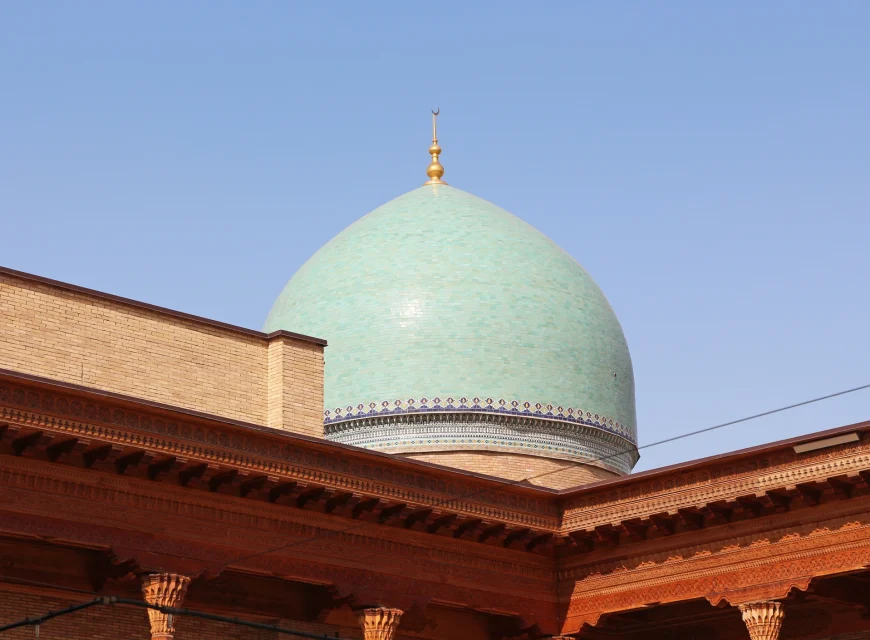
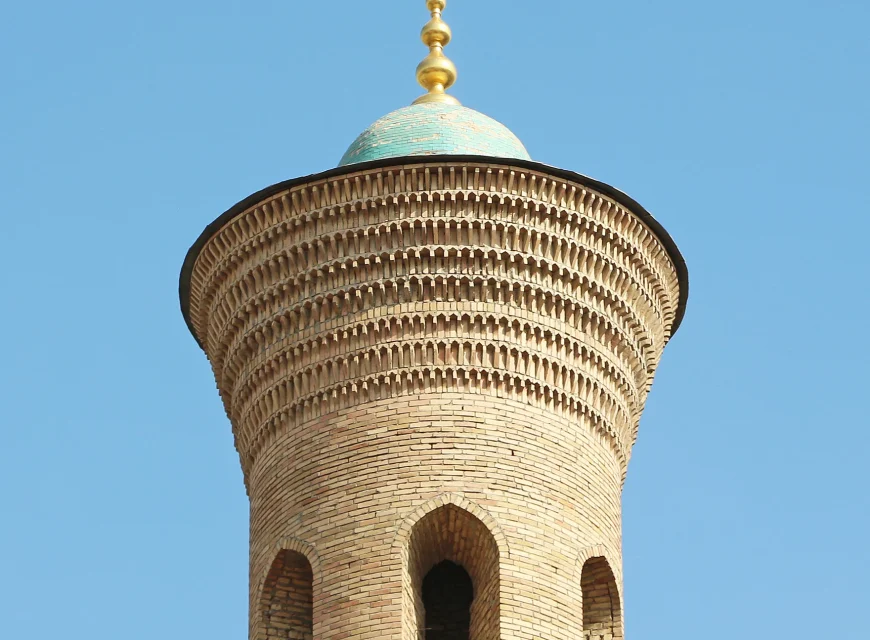
The Hazrati Imam complex, also spelled Khast Imam, forms the spiritual and architectural heart of old Tashkent. Developed around the mausoleum of Abu Bakr Muhammad Kaffal Shashi, a respected scholar, the ensemble includes mosques, madrasas, and courtyards adorned with ceramics. The domes, mosques, and madrasas offer a serene introduction to the region’s Islamic architectural traditions.
Visit early in the day when the light is soft and the courtyards are calmer. Dress respectfully, covering shoulders and knees, as this is an active religious site.
Chorsu Bazaar and the Old City
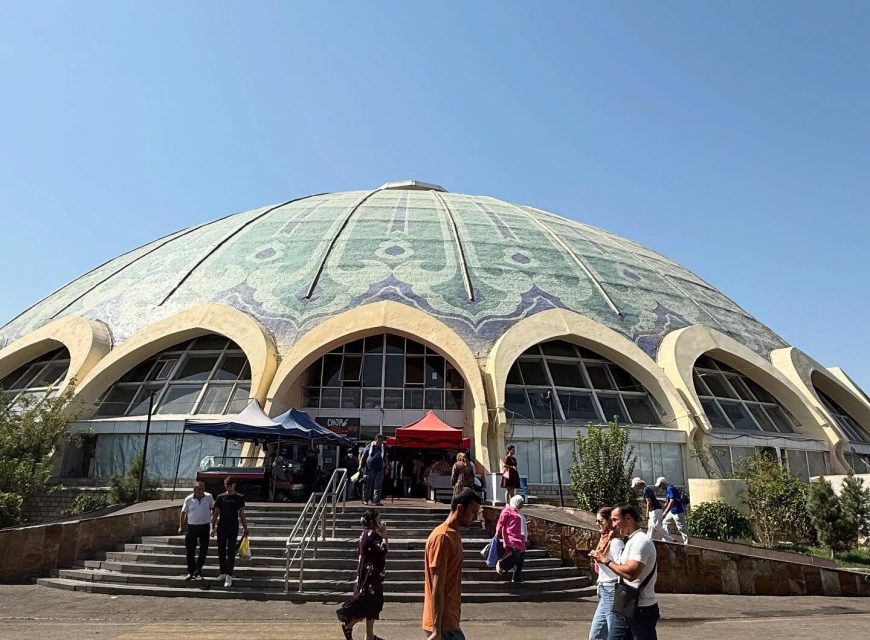
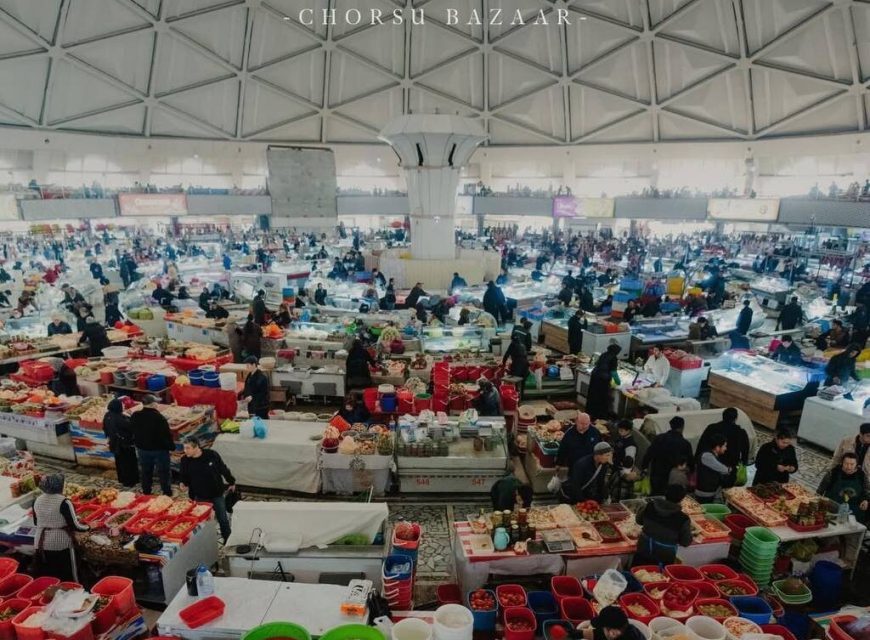
The neighborhood between Hazrati Imam and Chorsu contains winding lanes and residential quarters that offer a glimpse of traditional urban life. Chorsu Bazaar itself is the sensory heart of this itinerary. Under its immense blue-green dome and throughout the surrounding halls, vendors sell everything from traditional flatbreads to pyramids of dried apricots and raisins.
Look for traditional breads, dried fruits, nuts, spices, and fresh produce. A private guide can greatly enrich this part of Tashkent by explaining the significance of different goods and helping navigate the bustling halls. In the bazaars, friendly bargaining may be expected but should always remain respectful.
Tashkent Metro
The Tashkent Metro serves as both practical urban transport and one of the city’s most remarkable artistic experiences. Each station features distinctive design, making a metro ride a journey through Soviet-era public art.
Notable stations for first-time visitors include Kosmonavtlar, with its deep blue space-inspired ambiance and portraits of space-related figures; Alisher Navoi, featuring dome shapes and ornamental motifs inspired by the literary heritage of the famous Uzbek poet; Paxtakor, with decorative motifs evoking cotton, which played a central role in Uzbekistan’s economy; and Mustaqillik Maydoni, with polished stone and refined lighting in the institutional quarter.
Photography rules and security procedures may vary; check locally before taking pictures.
Amir Temur Square and the City Center
Amir Temur Square provides a useful and enriching starting point for exploring the institutional center of the capital. The equestrian monument to Amir Temur dominates a landscaped space surrounded by administrative buildings. From here, head toward the pedestrian zone often called Broadway, the Opera and Ballet Theatre, and surrounding parks.
This quarter distinguishes itself less through a single must-see monument than through its urban composition: wide avenues, green spaces, and the rhythm of daily life in a modern Central Asian capital.
Museum of Applied Arts
The Museum of Applied Arts ranks among the best places in Tashkent to discover the visual language of Uzbek craftsmanship. The building itself forms an integral part of the experience, with rooms and courtyards adorned to help visitors distinguish between suzani embroidery, ikat textiles, Rishtan ceramics, and architectural ornaments.
Allow 60 to 90 minutes for a focused visit, or longer if decorative arts are a particular interest.
Modernist Architecture
Modernist architecture constitutes one of the principal attractions for architecture enthusiasts visiting Tashkent. Rather than viewing these constructions as mere Soviet vestiges, consider how architects adapted modernist principles to Central Asian climate, materials, and cultural needs.
In 2026, UNESCO inscribed a serial ensemble of ten buildings on the World Heritage List, recognizing the international significance of Tashkent’s modernist heritage. Depending on access conditions and opening hours, an architecture-focused itinerary might include notable examples in the city center and, with special arrangement, sites further afield. Some locations are working institutions or situated outside the city center, so a private tour offers flexibility, particularly for adapting schedules to light conditions on facades.
Parks and Evening Outings
Tashkent is a particularly green city for a Central Asian capital, with broad parks offering a more relaxed and authentic aspect of local life. Evening strolls, outdoor dining, and performances at the Alisher Navoi Opera and Ballet Theatre (schedules vary; check availability in advance) provide a pleasant contrast to daytime sightseeing.
Best Time to Visit Tashkent
The best time to visit Tashkent is spring, from late March through May, or autumn, from September through October. Spring often brings green vegetation and pleasant daytime temperatures, while September and October offer harvest season, clear skies, and comfortable weather for walking.
Summer can be very hot, and winter brings cold temperatures, though both seasons have their own appeal for travelers prepared for the conditions. Weather varies from year to year; consult reliable forecasts when planning.
Getting to Tashkent and Getting Around
Arrival by Air
Tashkent International Airport serves as the principal international gateway for most travelers beginning an Uzbekistan journey. Private transfers can be arranged to meet arriving flights and provide a smooth start to the trip.
Getting Around the City
The metro is practical for certain central routes and offers architectural interest in its own right. Taxis and private drivers handle most other urban transport efficiently. Your guide or driver can advise on the best option for each part of your itinerary.
Traveling from Tashkent to Samarkand and Bukhara
Tashkent serves as the main rail gateway for the classic Uzbekistan itinerary. The official railway network offers high-speed trains and other passenger connections to Samarkand, Bukhara, and beyond. Silk Road Elite can integrate Tashkent into broader private Uzbekistan itineraries, organizing accommodation, guides, transfers, and train or flight connections.
Practical Travel Tips for Tashkent
Visa and Registration
Entry rules for Uzbekistan depend on nationality and are subject to change. Foreign visitors are generally subject to registration requirements; hotels typically handle this for their guests. Check current requirements for your nationality well before travel.
Money
The local currency is the Uzbek som. Card acceptance has improved in Tashkent, particularly at hotels, restaurants, and larger shops, but cash remains useful for bazaars, small vendors, and tips. ATMs are available, though it is wise to carry some local currency.
Language
Uzbek is the official language, but Russian remains widely used in Tashkent. English is increasingly spoken in tourism contexts, though less common among the general population. A private guide bridges any language gaps and enriches the experience with local insights.
Dress Code and Etiquette
City dress is generally casual, but shoulders and knees should be covered when visiting religious sites. In bazaars, friendly bargaining may be appropriate but should always remain respectful. Photography of people should be done with permission.
Safety
Take normal urban precautions: secure valuables, be aware of surroundings, and follow local advice. Tashkent is generally considered safe for travelers, with a visible police presence in central areas.
Day Trips from Tashkent
With an extra day, consider an excursion to the Chimgan Mountains and Charvak region. These offer a dramatic change of scale, with mountain landscapes, reservoirs, and outdoor activities. The area appeals to nature lovers, photographers, and those who prefer a slower pace.
Day trips can be arranged as private excursions with transport, guide, and flexible timing.
Published Tours Connected With Tashkent
Use the canonical tour pages below for the current route, duration, and request details. Availability and inclusions should be confirmed for the intended travel date.
- Chimgan and Charvak Day Trip
- Uzbekistan Golden Triangle — 4 Days
- Uzbekistan Heritage Tour — 6 Days
- Amir Temur Uzbekistan Tour — 9 Days
- Grand Uzbekistan Tour — 14 Days
Plan Before You Travel
Use our guide to the best things to do in Tashkent for attractions and sightseeing plans, and our first-time Tashkent guide for arrival and city orientation.
Request a tailored itinerary. Before submitting personal details, review the privacy policy.